Nothing ruins a summer drive through Miami County quite like turning your temperature dial to max cool and getting hit with a blast of humid, hot air. When your car A/C is blowing warm air, an enjoyable commute instantly turns into an exhausting ordeal. Your automotive climate control system is a delicate, pressurized network that operates under intense strain when external temperatures climb.
Understanding why your air conditioning has failed is the first step toward restoring comfort to your daily drive. In this guide, you will learn about the precise mechanical flaws, electrical interruptions, and structural blockages that disrupt your cabin cooling. We will also highlight when a simple DIY check is sufficient and when federal environmental regulations require a professional hand.
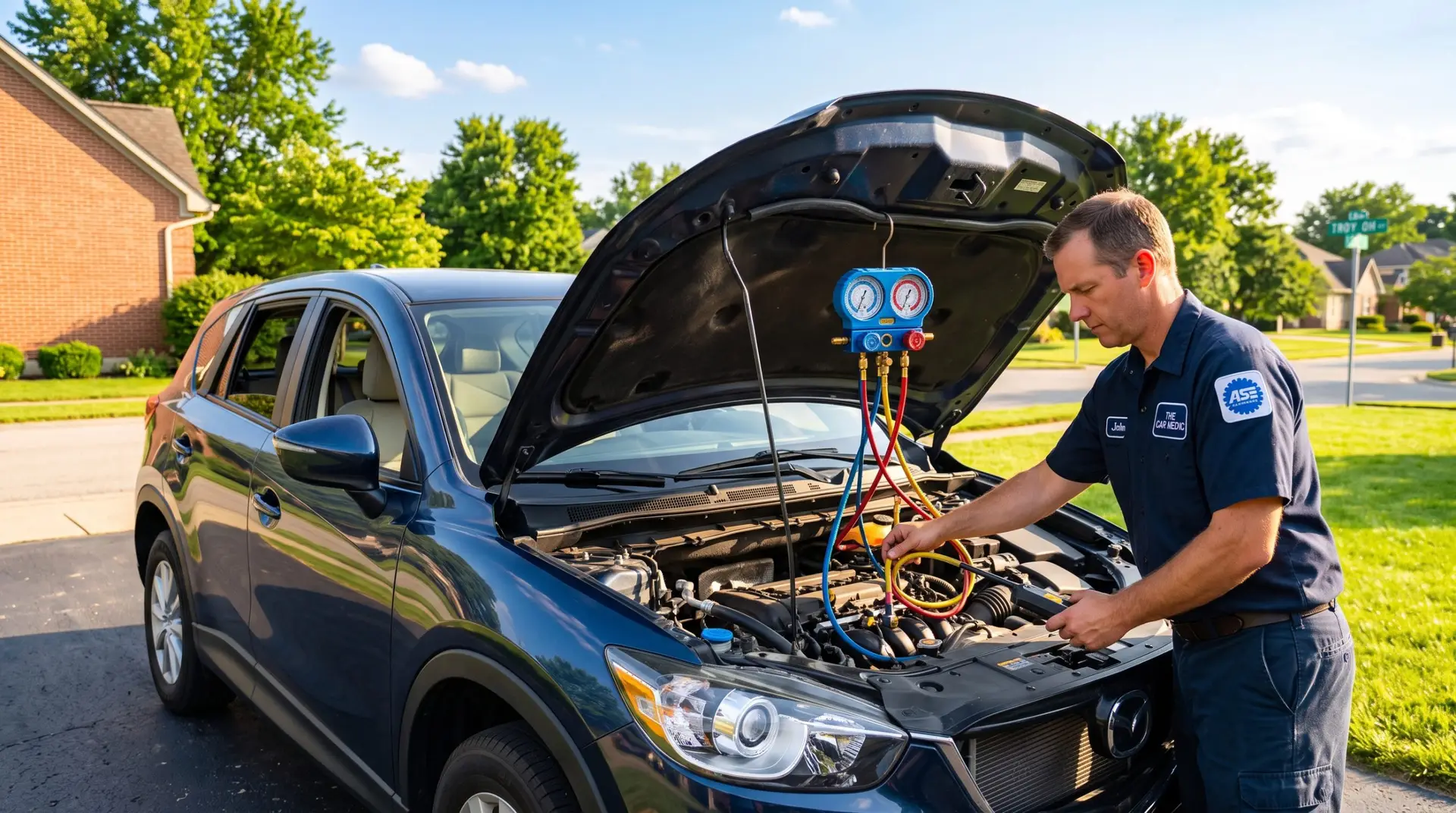
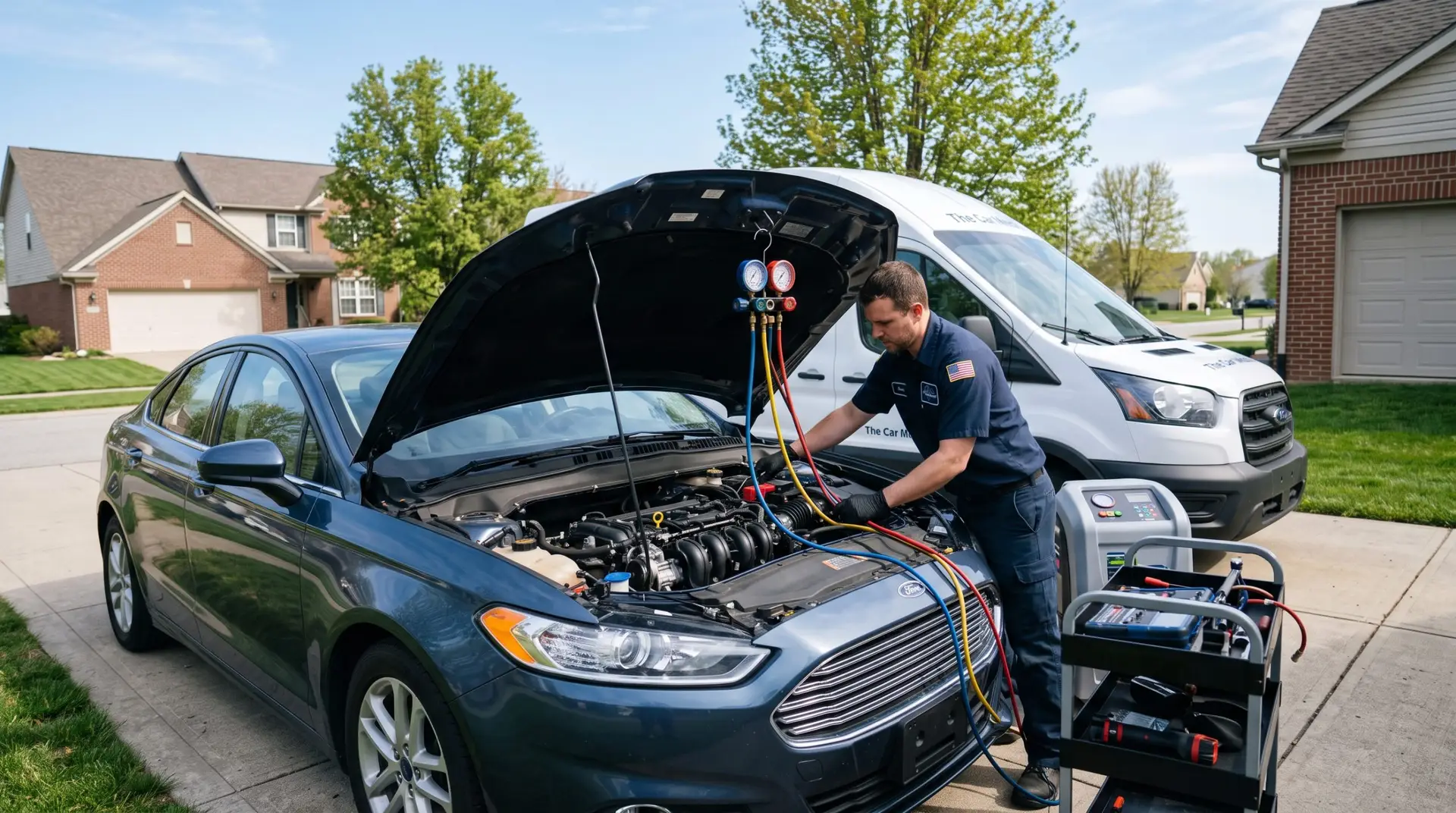
At The Car Medic, we believe auto repair should fit seamlessly into your schedule without the headache of towing fees or repair shop waiting rooms. Founded by John Rankin, an ASE-certified technician with over 20 years of experience, we bring a fully equipped mobile repair van straight to your home or workplace. Let’s break down the eight most common culprits behind your summer vehicle A/C failures.
Why is my car A/C blowing warm air instead of cold air?
The most common reason a vehicle’s ventilation system shifts from crisp, cold air to lukewarm or hot air is a loss of system pressure, frequently caused by a refrigerant leak. Refrigerant is the vital chemical compound that cycles through your A/C loop, absorbing heat from the cabin and releasing it into the atmosphere. Because the system relies on an exact operating pressure, even a microscopic drop in volume will prevent the system from cooling properly.
When the system volume drops below a built-in threshold, a safety mechanism called the low-pressure cutout switch triggers. This switch halts the operation of your compressor to protect its internal moving parts from running dry without lubricating oil. Without the compressor circulating the remaining fluid, your vents will simply blow stagnant, ambient air from under the hood.
Beyond simple fluid loss, a faulty blend door actuator inside your dashboard can cause this exact issue. This small electronic motor regulates the internal doors that mix hot air from your engine’s heater core with cold air from the A/C system. If this actuator slips or fails electrically, it can permanently lock the ventilation door into the heat position, forcing hot engine air directly through your cabin registers.
How does a low refrigerant charge impact summer cooling performance?
A low refrigerant charge directly diminishes your car’s cooling capacity because it starves the evaporator core of the liquid volume needed to absorb interior cabin heat. When your system is short on chemical fluid, the remaining liquid boils off too early inside the evaporator lines. This uneven thermodynamic transfer leaves large sections of the cooling core completely warm, leading to weak or uneven air temperatures across your dashboard vents.
In addition to poor cooling output, an insufficient fluid charge forces your entire A/C system to work significantly harder than designed. The compressor clutch will cycle on and off rapidly—a process known as short-cycling—as the system fights to stabilize internal pressures. This continuous mechanical engagement generates excessive heat under your hood, increases fuel consumption, and inflicts premature structural wear on the compressor internals.
It is critical to note that automotive air conditioning systems are completely sealed loops; they do not naturally consume or burn off refrigerant over time. If your system is low on pressure, it means a physical hole, cracked rubber line, or corroded metal fitting has allowed the gas to escape. Simply adding a retail “recharge can” from an auto parts store will not repair the underlying structural breach and can introduce harmful moisture or sealants into your system.
Can a failed compressor clutch prevent the system from engaging?
Yes, a failed compressor clutch will completely stall the cooling loop by preventing the mechanical pump from drawing power from your engine’s serpentine belt. The compressor acts as the heart of your automotive air conditioning network, responsible for pressurizing the low-pressure gas into a high-temperature liquid. The clutch assembly uses an electromagnetic coil to lock the spinning belt pulley to the compressor’s main input shaft when you activate the A/C button inside the cabin.
Over years of service, the electromagnetic coil within the clutch can develop open internal shorts, or the physical friction plate gap can wear beyond specified tolerances. When this occurs, the magnetic field loses the strength required to pull the clutch hub tightly against the rotating pulley. The pulley will spin freely on its bearing, but the internal pistons of the compressor will remain completely motionless, leaving your system unable to generate cold air.
Drivers can often diagnose a clutch failure through visual inspection or audible cues when turning the vehicle’s A/C controls on and off. With the hood safely raised, you should hear a distinct mechanical “click” followed by a visible change: the center hub of the A/C pulley should spin in unison with the outer belt line. If the outer belt spins smoothly but the center hub remains static, your system is suffering from a mechanical engagement or electrical power supply failure.
What happens when the A/C condenser gets blocked or damaged?
When an A/C condenser becomes structurally blocked or physically damaged, it loses its ability to shed the intense heat collected from your vehicle’s interior. The condenser is positioned at the very front of your car, directly ahead of the radiator, where it relies on high-volume oncoming airflow to cool high-pressure refrigerant vapors back into a liquid state. If dirt, autumn leaves, road salt, or swarms of summer insects clog the delicate aluminum cooling fins, air cannot pass through the core.
Without proper airflow across these cooling fins, the temperature and pressure within the high-side lines will rapidly spike to unsafe levels. The air conditioning system will struggle to dump its thermal load, causing the cabin vent temperatures to rise dramatically, particularly when your vehicle is idling at a red light or stuck in heavy traffic. Once you accelerate to highway speeds, the increased natural air forcing its way through the blockage may temporarily restore cold air, serving as a clear diagnostic indicator of a condenser issue.
Because of its vulnerable position behind the front grille, the condenser is also highly susceptible to impact damage from flying stones and highway debris. A small pebble can easily puncture the thin aluminum tubes, causing an immediate loss of refrigerant gas and systemic lubrication. If you spot oily stains or a dark residue spreading across the lower face of your condenser, it is a definitive sign that a rock strike has breached the component and caused a system leak.
How do electrical failures and blown fuses stop cabin airflow?
Modern automotive HVAC systems rely on a complex network of electrical relays, control modules, fuses, and wiring harnesses to coordinate component operations. A single blown fuse or a corroded grounding wire can immediately interrupt the power circuit traveling to your blower motor or your compressor clutch. If an electrical surge or component short overloads the dedicated circuit, the safety fuse will pop to prevent a localized electrical fire, causing instant system shutdown.
Another frequent failure point within the dashboard electrical architecture is the blower motor resistor. This component modulates the electrical current entering your cabin fan to control your interior fan speeds (low, medium, high). When the resistor degrades or burns out from continuous use, it often cuts power to all lower speed settings entirely, leaving you with a fan that only blows on its maximum setting, or a system that refuses to activate at all.
Corroded or loose electrical connectors at the base of the compressor clutch also account for many sudden summer A/C failures. The extreme vibrational forces of everyday driving, combined with exposure to winter road salts and engine oil leaks, can slowly degrade these sensitive terminal pins. If the electrical signal from your vehicle’s primary engine control unit cannot reach the compressor, the cooling system will remain completely inert despite correct refrigerant pressures.
Why is a clogged cabin air filter a hidden cause of poor cooling?
A heavily clogged cabin air filter is a frequently overlooked cause of poor summer cooling because it severely restricts the volume of air passing across your freezing evaporator core. The cabin air filter is responsible for trapping dust, pollen, mold spores, and outdoor debris before they can enter your dashboard ventilation ductwork. Over thousands of miles, this pleated paper element will gradually plug up, acting like a physical choke point for your vehicle’s interior air circulation.
When the volume of air flowing through the filter drops significantly, you will notice a substantial drop in airflow velocity coming out of your dashboard vents, even when the fan speed is turned to maximum. Because there is not enough warm cabin air blowing across the evaporator to warm it up, the moisture accumulating on the evaporator fins will rapidly freeze into solid ice. This structural ice buildup blocks the remaining passage entirely, cutting off airflow and causing vent temperatures to climb.
Replacing a cabin air filter is one of the easiest, most cost-effective maintenance tasks you can perform to protect your system’s overall efficiency. Most automotive manufacturers recommend exchanging this filter every 12,000 to 15,000 miles, or more frequently if you regularly navigate dusty country roads or park beneath heavy tree canopies. Neglecting this simple filter swap places unnecessary mechanical stress on your blower motor, risking an expensive electrical failure.
Can cooling fan malfunctions cause your A/C to overheat?
Yes, a malfunctioning engine cooling fan will cause your A/C system to quickly overheat because it eliminates the necessary airflow through the condenser when your vehicle is moving slowly or stopped. Your car features one or more electric cooling fans mounted behind the radiator and condenser assembly to pull ambient air through the cores when vehicle speed is insufficient. If a fan motor burns out, or if the control relay fails, the heat-exchange process stops entirely during low-speed driving.
When the cooling fan fails to engage, the high-side pressure inside your refrigerant lines will climb dangerously within minutes of idling. To protect the system from structural rupture or compressor damage, the vehicle’s engine control module will automatically disengage the compressor clutch. This safety cutout immediately halts the cooling cycle, causing the air flowing from your dashboard vents to turn warm until the vehicle moves fast enough to force air through the front grille manually.
Operating your vehicle with a dead cooling fan poses a severe threat to your entire powertrain, far beyond losing your cabin air conditioning. The lack of air transfer will quickly cause engine coolant temperatures to spike into the red zone, putting you at risk for blown head gaskets or cracked engine blocks. If you notice your A/C blowing warm specifically when sitting in traffic or during drive-thru lines, check your temperature gauge immediately to ensure your engine isn’t on the verge of overheating.
What makes a failed expansion valve or evaporator core difficult to fix?
A failed expansion valve or a leaking evaporator core presents a difficult repair challenge because these components are located deep inside the vehicle’s dashboard assembly. The expansion valve is the metering device responsible for regulating the precise flow of high-pressure liquid refrigerant into the low-pressure evaporator core. If the valve pins become stuck open, the evaporator will flood with liquid and fail to cool; if it gets stuck shut, it starves the core entirely, cutting off all interior cooling.
The evaporator core itself acts as the primary heat-absorber for your cabin air, tucked safely inside a plastic HVAC housing beneath your dashboard. Because it is continuously exposed to heavy condensation during summer use, moisture can mix with microscopic airborne debris to create a corrosive environment that slowly eats holes through the aluminum walls. These deep, internal leaks are impossible to diagnose through simple visual inspection under the hood without specialized electronic leak detectors or ultraviolet dyes.
Replacing an evaporator core or an expansion valve routinely requires a technician to completely remove the vehicle’s front seats, steering column, and main dashboard console. This complex, multi-step teardown demands precise mechanical expertise, specialized tool sets, and hours of careful labor to complete safely without damaging sensitive internal wiring or airbag modules. This is precisely why seeking a certified professional is the safest path to ensure your dashboard is reassembled correctly and your system functions like factory new.
Get Cold Air Back In Your Vents — Without Leaving Your Home
Don’t spend your hot summer days sweating in a local shop’s crowded waiting room or paying expensive towing fees to get your climate control fixed. The Car Medic completely eliminates the traditional auto repair hassle by operating a fully equipped mobile service van that brings professional automotive care straight to your driveway or workplace. Whether you need a precise computer scan, a detailed leak inspection, or a comprehensive system recharge, John Rankin provides honest, transparent pricing and master-level execution directly on-site.
We serve drivers across Troy, Piqua, Tipp City, Covington, Vandalia, West Milton, Huber Heights, and the surrounding communities within Miami County, Ohio. As an ASE-certified and EPA Section 609 certified operation, we use only premium, commercial-grade parts backed by an ironclad 12-month / 12,000-mile warranty. Contact The Car Medic today at 937-609-3554 via phone or text to receive an upfront, hassle-free estimate, and get your car’s air conditioning performing exactly as it should.
Frequently Asked Questions (People Also Ask)
Is it safe to drive my car if the A/C is blowing warm air?
Yes, it is generally safe to drive your vehicle if the air conditioning is blowing warm air, as a lack of cabin cooling will not interfere with your primary steering, braking, or engine mechanical functions. However, you must carefully monitor your dashboard temperature gauge to ensure the warm air isn’t being caused by a failed engine cooling fan or a broken serpentine belt, both of which can cause catastrophic engine overheating. If the engine temperature remains normal, the A/C issue is purely a comfort concern rather than a mechanical hazard.
How much does it cost to fix a car A/C that blows warm air?
The cost to repair a car A/C system varies significantly depending on the underlying failure, with a basic mobile diagnostic inspection and system recharge starting at $99 at The Car Medic. Minor repairs like replacing a blown electrical fuse, a bad relay, or a clogged cabin air filter are very affordable. However, if your system requires major component replacements—such as a new mechanical compressor, front condenser, or internal dashboard evaporator core—the total price can range from several hundred to over a thousand dollars due to component costs and intensive labor.
Can I recharge my car A/C myself with a store-bought retail kit?
While retail DIY recharge cans are widely available at local auto parts stores, using them is not recommended and can cause severe, permanent damage to your air conditioning system. These over-the-counter cans lack the precision gauges needed to measure high-side system pressures, making it incredibly easy to overcharge the system and blow out your compressor seals or lines. Furthermore, automotive A/C loops are completely sealed systems, meaning a low charge indicates a physical leak that a simple can of gas cannot legally or permanently repair.
Why does my car A/C blow cold air at highway speeds but warm air when idling?
If your vehicle’s air conditioning blows cold air while driving fast on the highway but turns warm when idling at a stop, your system is suffering from a lack of airflow across the front condenser. This symptom is almost always caused by a broken electric radiator cooling fan, a failed fan control module, or a condenser core heavily blocked by dirt, bugs, and road debris. When you drive at high speeds, the natural force of oncoming wind pushes enough air through the grille to cool the refrigerant, but that cooling disappears the moment your vehicle stops moving.
How do mechanics find a hidden refrigerant leak in an automotive A/C system?
Professional automotive technicians use three primary methods to pinpoint hidden leaks within a sealed air conditioning loop: electronic leak detectors, specialized ultraviolet (UV) dyes, and nitrogen pressure testing. Electronic “sniffers” are highly sensitive tools passed along the A/C lines that audibly alert the mechanic when they detect trace amounts of escaping chemical gas. Alternatively, a technician can inject a fluorescent UV dye into the system, allow it to circulate, and then trace the entire lines with a blacklight to spot exactly where the glowing fluid is seeping out.
What is the difference between R-134a and R-1234yf refrigerant types?
R-134a and R-1234yf are two distinct chemical refrigerants used in automotive air conditioning systems, and they are not compatible or interchangeable with one another. R-134a was the industry standard for vehicles manufactured between 1994 and roughly 2016, valued for its efficient cooling properties but later phased out due to its high global warming potential. R-1234yf is an environmentally friendly alternative engineered to break down quickly in the atmosphere, and federal environmental laws require certified equipment, like an EPA Section 609 certification, to handle and service both types safely.